
Watching European TV from another country can be a rewarding way to stay connected to home or discover new shows, sports and culture. This guide explains which channels are worth following, regional viewing tips, and the practical ways to watch them from anywhere. With more streaming services and IPTV options available, you no longer need to be in Europe to enjoy national and regional broadcasts. Below we cover major broadcasters, local channels, platform choices, and the legal and technical basics you’ll want to know for a smooth experience.
Key Takeaways
- Major European broadcasters — like BBC, ARD, TF1 and RAI — offer wide-ranging national programming across news, drama and documentary genres.
- Regional stations such as TVE, RTÉ and S4C serve local-language audiences and highlight regional culture and news.
- IPTV and streaming services — including Sling TV, fuboTV and YouTube TV — can give viewers abroad access to many European channels.
- Satellite, OTT and streaming platforms each differ in price, flexibility and the availability of live or on-demand European content.
- Popular IPTV platforms such as Zattoo, VooV and Magine TV focus on broad European channel lineups and handy features like cloud DVR.
- Sports fans can turn to Sky Sports, beIN Sports and DAZN for wide sports coverage across Europe.
- Broadcasting rules, geoblocking and licensing impact what you can legally stream across borders.
- For reliable streaming you’ll need a fast, stable internet connection, compatible devices and, in some cases, a VPN to handle region restrictions.
- Free streaming options exist but often come with limited catalogs, ads and potential security concerns.
Which Are the Best European TV Channels and Their Regional Broadcast Areas?
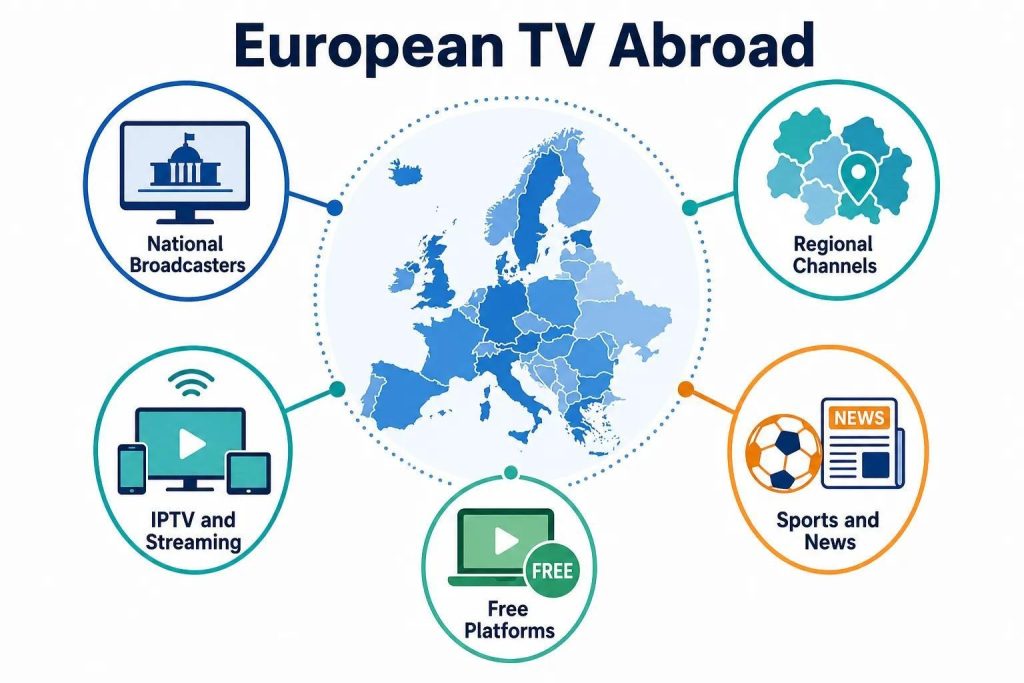
European TV offers a broad mix of news, sport, entertainment and cultural shows. Knowing which national and regional channels serve which audiences helps you find the content you want to watch.
What Are the Major National Broadcasters Across Europe?
National public and commercial broadcasters remain central to Europe’s TV landscape. Key examples include:
- BBC (United Kingdom): Widely respected for in-depth news, quality dramas and factual programming.
- ARD (Germany): A major German public broadcaster with broad news, sports and cultural output for German-speaking viewers.
- TF1 (France): One of France’s leading commercial channels, known for popular series, films and daily news.
- RAI (Italy): Italy’s public broadcaster, offering a mix of news, entertainment and cultural shows with national reach.
These channels shape national conversation and remain go-to sources for local news and mainstream entertainment.
Which Regional Channels Offer Local Language and Cultural Content?
Regional broadcasters keep local languages and traditions alive on screen. They’re ideal when you want content tied to a specific area or culture:
- TVE (Spain): Spain’s national broadcaster with strong regional programming that reflects the country’s linguistic and cultural diversity.
- RTÉ (Ireland): Ireland’s main broadcaster, offering Irish- and English-language programming that highlights Irish culture and current affairs.
- S4C (Wales): A Welsh-language channel focused on local news, entertainment and cultural shows for Welsh audiences.
Regional channels are especially valuable if you want programming in a specific language or a taste of local culture.
How Can Viewers Watch European TV Abroad: Access Methods and Platforms?
Thanks to technology, there are several practical ways to watch European channels from outside Europe. Each method has trade-offs in cost, selection and ease of use.
What Are the Options for IPTV Providers Offering European Channels?
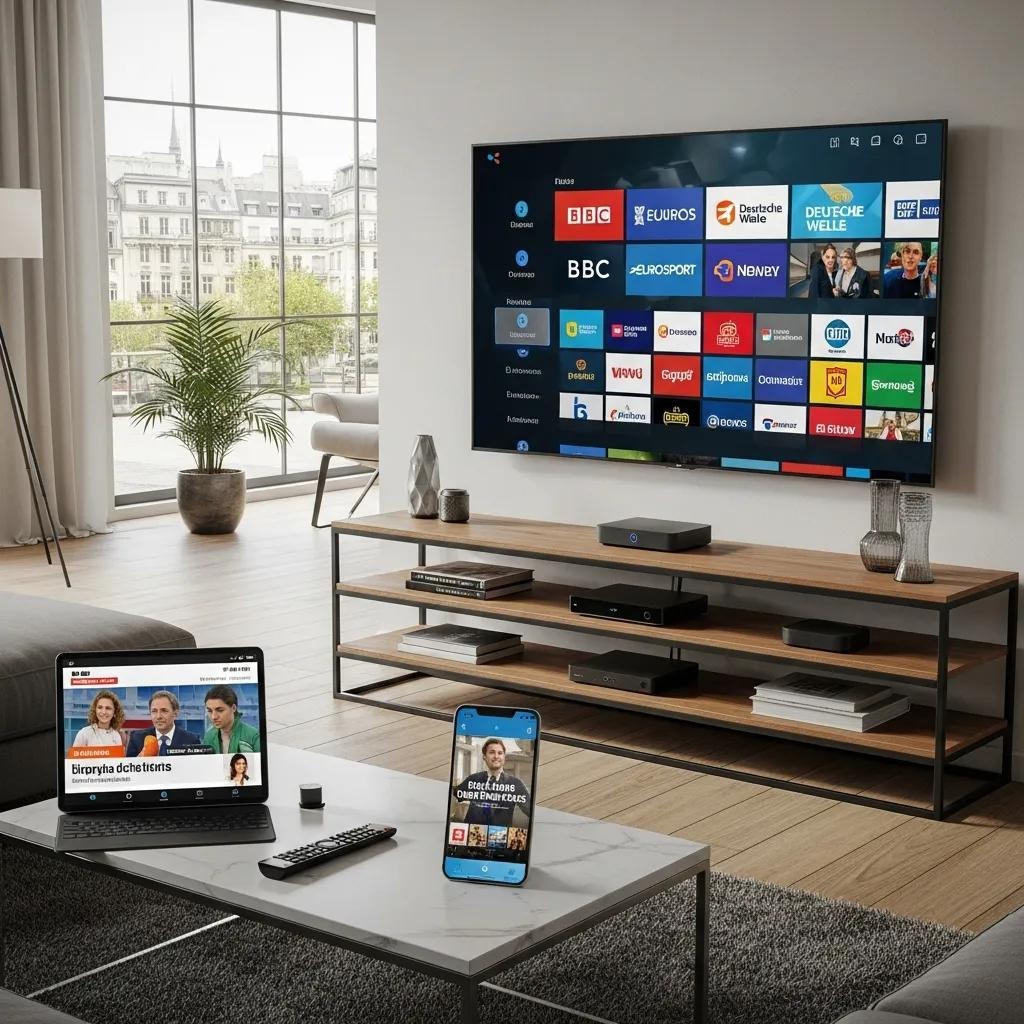
IPTV services are a popular route to European TV, often bundling live channels, on-demand libraries and cloud DVR. Notable examples include:
- Sling TV: Offers packages that include some European news and entertainment channels, with flexible subscription options.
- fuboTV: Sports-focused with access to many international sports channels, making it a favorite for live sports viewers.
- YouTube TV: A user-friendly streaming option that includes local and national channels in some packages and is easy to use across devices.
Each provider structures its channel lineups and pricing differently, so check the specific offerings for the regions you care about.
How Do Satellite, OTT, and Streaming Services Compare for European TV Access?
Understanding the differences helps you pick the right delivery method for your needs:
- Satellite TV: Delivers many live channels and strong regional coverage but usually requires a dish, installation and can be more costly.
- OTT Services: Platforms like Netflix and Hulu focus on on-demand content and may not carry live national broadcasts.
- Streaming Services: Services such as Amazon Prime Video and Disney+ mix on-demand libraries with some live or premium sports content — versatile but varied by region.
Choosing between these depends on whether you prioritize live TV, sports, or on-demand libraries and how much flexibility you need.
For more context on how viewing habits have changed, see this study tracing subscription TV’s shift in Europe.
Evolution of European Subscription TV: Satellite, IPTV, and OTT Streaming
This study reviews how subscription TV evolved in Greece from 2001 to 2023, tracking the move from satellite-dominated offerings to IPTV and OTT platforms. It uses historical data to explain why satellite providers like NOVA gave way to IPTV solutions and global OTT players such as Netflix and Amazon Prime. The research highlights the Greek pay-TV market’s adaptability and offers insights useful for broadcasters and media managers.
The Evolution of Subscription Services in Greece: From Satellite TV to Over-The-Top (OTT)
Streaming Models, A Papathanasopoulos, 2023
What Are the Top IPTV Providers in Europe and How Do They Compare?
As IPTV gains traction, several providers stand out for their channel coverage and user features. Comparing them helps you pick what fits your viewing habits.
Which IPTV Services Offer the Widest European Channel Selection?
Some services specialize in broad European coverage and ease of use:
- Zattoo: Known for a large lineup of European channels and a clean user experience across devices.
- VooV: Competes on price and offers a diverse set of channels tailored to various European markets.
- Magine TV: Provides flexible subscription tiers and a straightforward interface for watching live and catch-up TV.
Each service targets different markets, so check channel availability and device support before subscribing.
What Are the Subscription Plans and Features of Leading IPTV Providers?
When comparing IPTV providers, focus on a few key factors:
- Pricing: Subscription costs vary widely — compare the channels included for the price.
- Channel Selection: The breadth and relevance of channels will determine how useful a service is for your needs.
- User Experience: Look for features like cloud DVR, on-demand libraries and multi-device streaming to match your habits.
Balancing these elements will help you find the provider that best matches your viewing priorities.
Which Regional TV Channels in Europe Are Best for Sports, News, and Entertainment?
Regional channels often specialize in specific genres. Below are top picks by category to guide sports, news and entertainment viewers.
What Are the Leading Sports Channels by European Region?
For sports fans, these channels are widely recognized:
- Sky Sports (UK): Extensive live coverage across football, cricket, rugby and other major sports.
- beIN Sports (France): Strong football and international sports programming available in several European markets.
- DAZN (Germany): A streaming-first sports service offering live events and exclusive sports content.
These services are go-to options for watching top-tier European and international sports events.
Which News Channels Provide Regional and International Coverage?
Reliable news channels with broad reach include:
- CNN International: Global reporting and breaking news with an international perspective.
- Euronews: European-focused news that covers politics, business and culture across the continent.
- Al Jazeera English: In-depth international reporting with strong coverage of global issues, including the Middle East.
These outlets are useful for staying informed on both regional developments and world events.
What Legal and Technical Tips Should Viewers Know for Streaming European TV?
Streaming across borders raises legal and technical questions. Below are the main points to keep in mind for compliant, reliable viewing.
How Do European Broadcasting Regulations Affect Cross-Border Streaming?
Key regulatory factors that influence access include:
- Geoblocking: Content is often restricted by location, so some programs or channels won’t be accessible outside their licensed region.
- Licensing Agreements: Rights differ by country and platform, which affects whether a show or channel can be offered internationally.
- Compliance: Respect local laws and service terms to avoid legal or account-related issues when streaming.
Knowing these limits helps you choose legal routes to watch the content you want.
What Technical Requirements Ensure Smooth Access to European Channels?
To minimize buffering and playback issues, consider these technical tips:
- Internet Speed: Aim for a stable connection; roughly 25 Mbps or higher is recommended for consistent HD streaming.
- Device Compatibility: Make sure your smart TV, streaming stick, phone or tablet supports the apps you plan to use.
- VPN Usage: A VPN can help with geoblocking for services that permit it, but check terms of service and local laws before using one.
Addressing these areas will improve your chances of a trouble-free viewing setup.
Where Can Viewers Find Free European TV Streaming Options and How Reliable Are They?
If you prefer not to pay, there are free options — but they come with limits. Here’s what to expect and where to look.
Which Platforms Offer Free Access to European Channels?

Popular free platforms that include some European content are:
- Pluto TV: Free live channels and on-demand shows, including news and niche entertainment streams.
- Tubi: A free library of movies and TV shows, with occasional European titles available.
- RTÉ Player: Offers Irish programming free of charge, including news and entertainment where available.
These services are a good starting point, especially if you want to sample European content without a subscription.
What Are the Limitations and Risks of Free European TV Streaming?
Free services can be useful, but be aware of these drawbacks:
- Limited Content: Free platforms rarely match the breadth of paid services and may miss live or premium channels.
- Ad Interruptions: Expect ads to break up programming — it’s how many free services stay free.
- Security Risks: Unofficial free sites can pose malware or privacy risks; stick to reputable platforms to stay safe.
Weigh convenience and safety when choosing free streaming options.
Frequently Asked Questions
What are the best devices for streaming European TV channels?
Smart TVs, streaming sticks (Roku, Amazon Fire TV Stick), and gaming consoles (PlayStation, Xbox) work well for home viewing and support most streaming apps. Tablets and smartphones are great for portable viewing. Confirm that your chosen device supports the specific apps or IPTV services you plan to use.
Are there any legal issues to consider when using a VPN for streaming European TV?
VPNs can help with geoblocking, but legality and acceptability vary. VPNs are legal in many countries, but some streaming platforms ban VPN use in their terms of service and may suspend accounts for violations. Always check local laws and the streaming service’s rules before using a VPN.
How can I improve my streaming quality for European TV channels?
Improve quality by using a fast, stable internet connection (25 Mbps+ for HD), preferring wired Ethernet over Wi‑Fi when possible, and closing bandwidth-heavy apps during streaming. Lowering the stream quality in the app can reduce buffering, and keeping apps and devices updated helps maintain performance.
What are the differences between free and paid streaming services for European TV?
Free services tend to offer smaller catalogs and show ads. Paid services usually provide larger channel lineups, higher video quality, fewer or no ads, and better customer support. Choose free options for casual viewing and paid plans for reliable access to specific channels or live sports.
Can I access European TV channels from outside Europe without a subscription?
Yes, some European channels and platforms offer free access abroad, and free services like Pluto TV or Tubi can provide limited European content. However, many channels remain geoblocked or require paid subscriptions. A VPN may help with access but check legal and service terms first.
What should I do if I encounter buffering issues while streaming?
If you see buffering, first test your internet speed and restart your router. Try a wired connection instead of Wi‑Fi, lower the stream quality, and close other apps using bandwidth. Make sure your device firmware and apps are up to date. If problems continue, contact your ISP for further help.
Conclusion
Streaming European television from abroad opens up access to diverse culture, news and live sports. By learning which national and regional channels matter, choosing the right platform, and addressing legal and technical considerations, you can enjoy European TV smoothly from anywhere. Start with the providers and tips above, and explore our guides to find the best setup for your viewing needs.


